History of AI
1 min read
History of AI
Artificial Intelligence (AI) has its roots in the mid-20th century when scientists began exploring the idea of machines that could simulate human intelligence.
Early Foundations
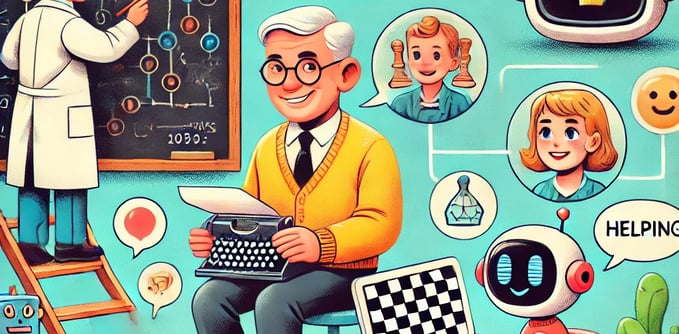
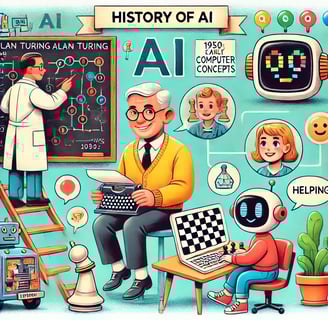
Alan Turing (1950): Proposed the concept of machine intelligence and created the Turing Test, which evaluates a machine's ability to exhibit human-like responses.
John McCarthy (1956): Coined the term "Artificial Intelligence" at the Dartmouth Conference, marking the official birth of AI as a field of study.
Development Milestones
1950s-1960s: Early AI programs like the Logic Theorist and General Problem Solver demonstrated machine reasoning.
1970s-1980s: AI faced setbacks due to limited computing power and funding (known as the "AI winter").
1990s-2000s: Machine learning and neural networks gained traction, leading to practical AI applications such as IBM’s Deep Blue defeating world chess champion Garry Kasparov in 1997.
2010s-Present: Advances in deep learning, big data, and computing power enabled AI breakthroughs, leading to personal assistants like Siri (2011), Google Assistant (2016), and ChatGPT (2022).
Notable AI Contributors
Alan Turing: Laid the foundation for AI and computer science.
John McCarthy: Defined the field and developed the LISP programming language for AI research.
Marvin Minsky: Co-founded the MIT AI Lab and made significant contributions to neural networks and robotics.
Geoffrey Hinton, Yann LeCun, and Yoshua Bengio: Pioneered deep learning and neural networks, shaping modern AI.